
On sovereignty and surrender
The reset that comes from choosing softness without self-abandonment.

It happened at a festival a few weeks ago.
The sky was blood-red from the lights, sound spilled across the field, that beautiful moment when an artist you love drops a new song and it hits like a track you already love. I was there with a group of friends and surrounded by a big crowd of people - strangers shifting in loose, easy rhythm. But in that moment, time slowed and I had a powerful moment on my own.

I felt this sudden, overwhelming awe.
Like life was right there, pulsing through everything.
And then - almost in the same breath -
I felt a pang of sadness I couldn’t quite name.
It didn’t cancel the joy.
But it threaded through it.
Like light through gauze.
I stood there, not trying to change the feeling, just letting it be both.
And I realised: I live here now.
In the tension.
In the duality.
It caught me off guard - not the music or the lights, but the emotional clarity.
A split-second moment where I felt both awe and ache.
I’ve been thinking about that ever since - how often life holds two things at once.
And how power isn’t found in resisting that tension, but in learning how to stand inside it.
I’ve come to recognise that signal: when something is asking to be felt, not fixed.
That moment was the part of a deeper question I’ve been sitting with all year.
So much of this year has been about sitting in the tension of two seemingly opposing forces:
Grief and joy.
Stillness and growth.
Resting and rebuilding.
Grief, for example, has made my heart softer - but my boundaries stronger.
The sensitivity and openness to feeling and connection is still there, maybe more than ever.
But I no longer offer it as freely.
Access now feels sacred.
And when I reflect on these dualities, I see how intrinsically linked they are.
Not opposites.
Partners.
Susan Cain would call this bittersweetness - the tenderness that arises when joy and sorrow are both present.
“Bittersweetness is a tendency to states of longing, poignancy, and sorrow; an acute awareness of the passing of time; and a curiously piercing joy at the beauty of the world.”
And Rilke wrote,
“Let everything happen to you: beauty and terror. Just keep going. No feeling is final.”
But what does that actually look like in practice? To let life move through you -
in all its awe and ache -
without giving up your centre?
“Awe transforms us. It makes us humble. It helps us see our place in the vast fabric of life.” - Dacher Keltner - Awe: The New Science of Everyday Wonder
Awe is often experienced with a sense of humility and emotional complexity. It reinforces that awe isn’t always euphoric - it often includes a pang of ache, especially in moments of beauty and transience. It comes with a quiet ache, because it reminds us that it’s fleeting. That we are, too.
This week, I’ve been exploring a paradox I keep returning to:
Sovereignty and surrender.
Can we really hold both?
I was faced with a series of events earlier this year that shook me.
Shook my sense of certainty, of safety, of how I thought things would go.
Since then, I’ve been thinking a lot about control.
About what it protects, what it costs, and what exists beyond it.
Because letting go too much can make you feel like a passive receiver of your own life.
But trying to over-control? That doesn’t work either.
It leaves no space for mystery, for emergence, for other people to show up in surprising ways.
I’ve had periods of time this year where I’ve oscillated to either extreme.
At one stage, overwhelmed by an existential feeling of lack of control, I decided there was no point pushing for anything. I felt a strong sense of resignation.
Then at other stages, out of fear, I tried to control the outcomes of things too much - craving certainty, attempting to close the gaps, understand the narrative arcs, trying not to leave anything open or up for interpretation.
I see now this was a response to the trauma I’d felt from shocking, unexpected grief. I didn’t want to feel like that again, so I tried to close loops.
Naval Ravikant is someone I turn to when I need to clear the noise. He says:
“The gut makes the decision, and then the brain just rationalises it.”
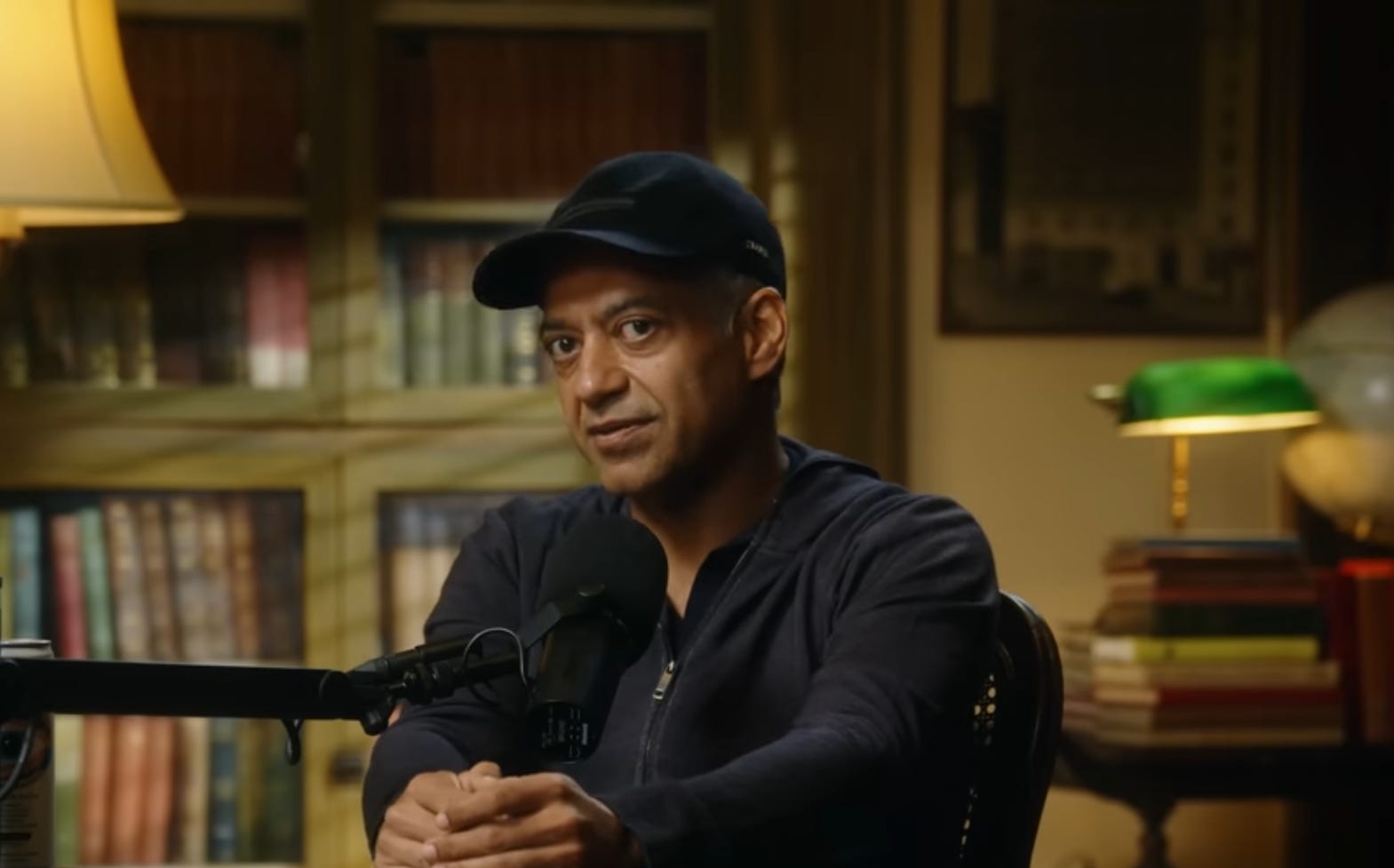
That stuck with me.
Because even someone as logic-driven as Naval acknowledges that the real compass isn’t the mind - it’s the body.
A pull.
A contraction.
A quiet sense of knowing before language arrives.
So if our bodies lead, and our minds follow, then learning to listen to the body becomes an act of sovereignty.
Control isn’t just a thought pattern.
It’s a felt response.
Tension in the jaw.
A tight chest.
A stomach flip.
An urge to fix something quickly just to feel safe again.
That’s where my somatic work and EMDR therapy come in.
I’ve just started this type of therapy and - while sceptical at first - I’ve found it to be a revelation!
In EMDR, I’ve been tracing patterns back to where they started.
Not to stay stuck in the past, but to give my body a new experience of safety.
And that’s where real sovereignty begins.
Not in getting it perfect.
But in having the capacity to pause.Where control used to say: act fast,
My body now says: breathe first.Where I used to think power meant certainty,
I’m starting to see it means presence.Instead of trying to solve problems through over-thinking and rationalising, I’m relearning how to get back into the wisdom of my own body and find peace surrendering there.
In stillness.
In feminine (and powerful) softness.
In self-trust.
And maybe what I’m really learning here is not just how to surrender,
but how to step into a different kind of power altogether.
Maybe power isn’t about control. It’s about capacity.
To hold complexity.
To feel without flinching.
To open without abandoning yourself.
I’m seeing that maybe what this season is really teaching me -
how to live in the space between knowing and not knowing.
How to stay open without losing shape.
How to trust the feeling in my gut
before the brain rushes in to explain it away.
Rilke didn’t just invite us to feel deeply - he dared us to stay there.
To “let everything happen,” yes, but also to not rush toward resolution.
He writes: “Try to love the questions themselves.”
That line has echoed for me lately. Because I’m full of questions.
When do I act and when do I allow?
When is softness wise and when is it naïve?
But maybe the power isn’t in having the answers.
Maybe it’s in the willingness to stand in the doorway - between what was and what’s not yet -
and hold the discomfort with grace.
To sit between the ache and the detachment,
the surrender and the structure.
Not with certainty.
But with clarity.
Not with control.
But with a kind of quiet, practiced trust.
A friend wrote to me this year after everything happened, and her words have stayed with me:
“This year has cracked your heart open.”
And it has.
But maybe that’s not something to be afraid of.
Maybe the cracking open is the beginning - not the breaking.
Rilke wrote:
“Believe in a love that is being stored up for you like an inheritance...”
And I do.
I believe in the kind of love - within and around us - that doesn’t need forcing.
The kind that strengthens us even in its absence.
The kind that waits until we’re ready to receive it with open hands and a rooted heart.
I see it as a kind of opening.
Not fragile. Not fractured.
Just... more honest.
More available to life, in all its chaos and beauty. Awe and ache.
To stay soft and still stay true.
And knowing that pain is part of expansion.
A kind of preparation.
For the kind of love Rilke described.
The kind worth waiting, and becoming, for.

And still - beautiful as that realisation is - living in this way takes practice.
It’s not just a mindset. It’s a muscle.
One built in the quiet moments. In the choosing. In the breath-before-the-reaction.
In the way we return to ourselves. Again and again.
So if you’re navigating your own season of bittersweetness, or just want to build more inner steadiness in a world that often pulls you off-centre -
Here are a few practices, prompts, and tools that have helped me stay soft, stay grounded, and stay true.
🧘♀️ Somatic Meditation
A body-first approach to presence. Not about clearing your mind, but coming home to your body.
Try this:
Sit or lie down, close your eyes.
Bring awareness to your feet.
Then slowly scan upward—calves, thighs, belly, chest, jaw.
Notice where you're tense, where you're numb, where you're soft.
Stay with sensation. Let it speak before the story does.
Use when:
You feel the urge to control, over-function, or rush clarity.
🫁 Nervous System Reset
A simple breath practice to calm the body and reconnect to safety.
Try this:
Inhale through your nose for 4 counts.
Hold for 4.
Exhale through your mouth for 8.
Repeat slowly until your heart rate softens.
Optional: Place one hand on your chest, one on your belly. Remind yourself—it’s safe to pause.
Use when:
You’re about to react, reach, spiral, or override your needs.
✍️ Re-Anchoring Journal Prompt
Come back to your values and boundaries when you feel off but can’t name why.
Ask yourself:
What are my top 3 values (in love, work, life)?
What does it look like when they’re honoured?
What does it feel like when they’re not?
What boundary protects each value?
Use when:
You need clarity, realignment, or a reminder of your standards.
Reset Prompts
A few invitations for reflection—write, voice-note, walk-and-wonder style.
What does sovereignty feel like in your body—not as control, but as clarity and calm?
Where are you being asked to stay—rather than escape, react, or collapse?
What question in your life right now doesn’t need an answer—but wants to be lived?
What does your gut know that your mind is trying to rationalise away?
Where are you feeling tension? What would it look like to explore it with curiosity instead of control?
Reset Reflections
Bringing back this section! Where I include a community contribution :)
This week is from someone I was at University with - who has just written a book.
What inspired you to start With Love, Monica?
When I get asked this sometimes I wish I had a more glamorous answer to tell, but the truth is love - in all its forms - was what I struggled with the most in life, especially in the latter half of my twenties.
I still remember the moment I realised that the common denominator in my repeated unhealthy relationship patterns was me. It was a lightbulb moment, recognising that if I wanted different results, I had to take ownership over my love life and stop thinking that I was a helpless victim of circumstance.
At this point I thought, having had the eureka moment of awareness, that it would be smooth sailing. But once I recognised that I was part of the problem, the frustration came when I still had no idea how to find the solution. The messages we receive about love are often so confusing and misleading. So much of what we’re taught about relationships through social media, rom-coms, reality TV, and even Disney fairytales, is so much rooted in performance, transaction, and prioritising surface-level traits, rather than what actually creates long-lasting compatibility.
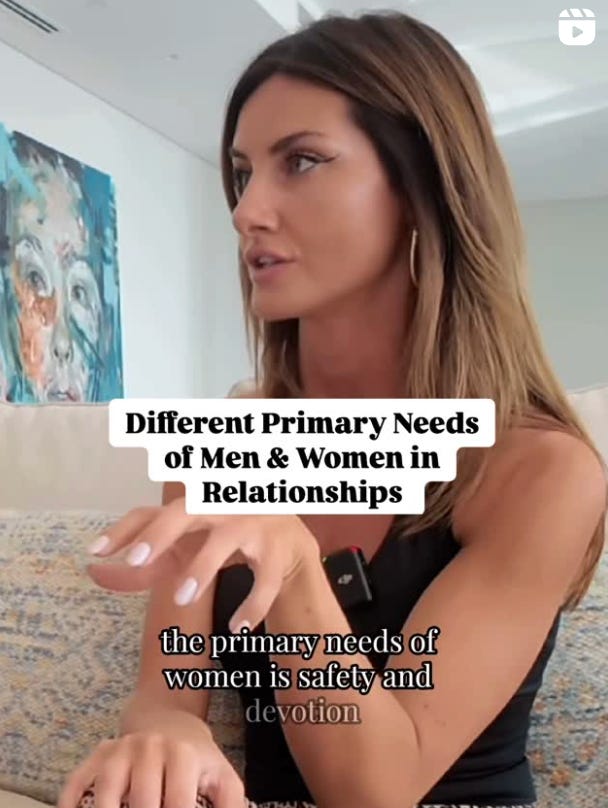
What’s rarely taught is that a healthy relationship with another person begins with the one we cultivate with ourselves.
Through my own journey, I realised how ill-educated we all are about love and partnership. Even those of us who grew up in households where parents stayed together may not have witnessed things like healthy conflict repair or truly supportive dynamics. Then, you add to that the modern dating landscape, which seems somewhat dystopian in comparison to what our parents’ generation experienced. So we’re all left to blindly work it out through painful trial and error, until we turn to the right educational resources and professionals over the likes of Love Island.
And this is a big part of why it became my mission to help people create healthier loving relationships, starting with the one they have with themselves. So I guess in short, I turned my pain into my purpose, and that makes it all worthwhile.
What are the signs of a healthy partnership?
True compatibility and relational viability typically reveals itself in the moments no one else sees.
It’s in how two people repair conflict, how they communicate with one another, the admiration they have for their partner, and the respect and honesty they show to each other (even when they are frustrated with them in the moment!). It’s in their ability to remain each other’s safe space, even in tough times.
For me, another beautiful marker of a healthy relationship is when it’s a growth partnership - with both people committing not only to their evolution as individuals but also as a couple. That keeps excitement, fulfilment and vitality alive in the dynamic, even in the long-term.
You don’t need to have all your surface level “wants” fulfilled to have a healthy partnership but I do believe you need to have your deeper “needs” met. These are things like emotional safety, respect, appreciation, and devotion. Knowing your true needs and non-negotiables before you enter a relationship is one of the most powerful ways to attract the right kind of love for you.
If someone has been stuck in unhealthy dating patterns, how can they reset?
The truth is unhealthy dating patterns rarely come from the external world - they’re reflections of what’s happening internally. If we’re weighed down by many unhealed past wounds, if we carry unhealthy childhood conditioning, if we are disconnected from our self-awareness and self-attunement, or if we have little to no self-love, self-worth, and self-esteem, then it’s almost inevitable that we’ll attract relationships that mirror those inner struggles.
That’s why it’s so important to allow yourself the time after a breakup to reflect, heal, and integrate the lessons of that relationship before jumping into a new one. Otherwise, the same patterns tend to repeat.
Our earliest experiences of love and conflict as children - both demonstrated to us and around us - shape our adult attachments more than we realise. So if you find yourself in an unhealthy dating cycle, it’s worth asking, What belief about love and relationships am I still carrying from my past? And, What beliefs do I hold about myself and my own lovability? Sometimes the work is less about “finding the right person” and more about unlearning what we thought we had to be in love.
What’s a small daily practice people can try that’s surprisingly powerful?
Connect with your inner child. If that sounds too esoteric, think of it as simply connecting in stillness with yourself each day to see what you need to feel loved, nurtured and protected by you today. And then, provide that for yourself, even if it takes willpower or courage.
When you practice this consistently, you become the loving parent to yourself. You stop outsourcing your worth and safety to others, and instead build a foundation for healthy love to find you, rooted in self-trust, self-love, and wholeness.
Socials
Instagram & YouTube: @withlove.monica
TikTok: @withlove.monicawadwa
Website: www.monicawadwa.com
Book: https://www.amazon.co.uk/Queen-Treatment-Steps-Date-Attract/dp/B0FNJ7VG59/ref=tmm_pap_swatch_0?
Let’s spread the love…
Know someone who needs to read this? Share with a friend <3
Thank you for being here!
I love writing for this community. If something resonated leave a comment or drop me a DM.
Katie xx
Thank you for all your work, thought, consideration and obvious empathy in this project. It has given me lots of ideas for taking on board now and for taking away for future re-readings. I count myself fortunate to be in a loving marriage of more than fifty years, with two sons, one daughter and seven grandchildren. I agree with you on the importance of becoming the human you really want to be and being able to love that person because you are loving and giving, truthful and honorable. That way, when you grow to love someone else, you can confidently give yourself to them in the relationship. I don’t think we can love by giving deceitful, shoddy goods.
"I felt this sudden, overwhelming awe.
Like life was right there, pulsing through everything.
And then - almost in the same breath -
I felt a pang of sadness I couldn’t quite name.
It didn’t cancel the joy.
But it threaded through it.
Like light through gauze.
I stood there, not trying to change the feeling, just letting it be both.
And I realised: I live here now.
In the tension.
In the duality.
It caught me off guard - not the music or the lights, but the emotional clarity.
A split-second moment where I felt both awe and ache."
Loved reading this. This bit in particular is really, really good. Have you thought about posting excerpts like this on LinkedIn?